
Integrated Developments: The Price of Convenience
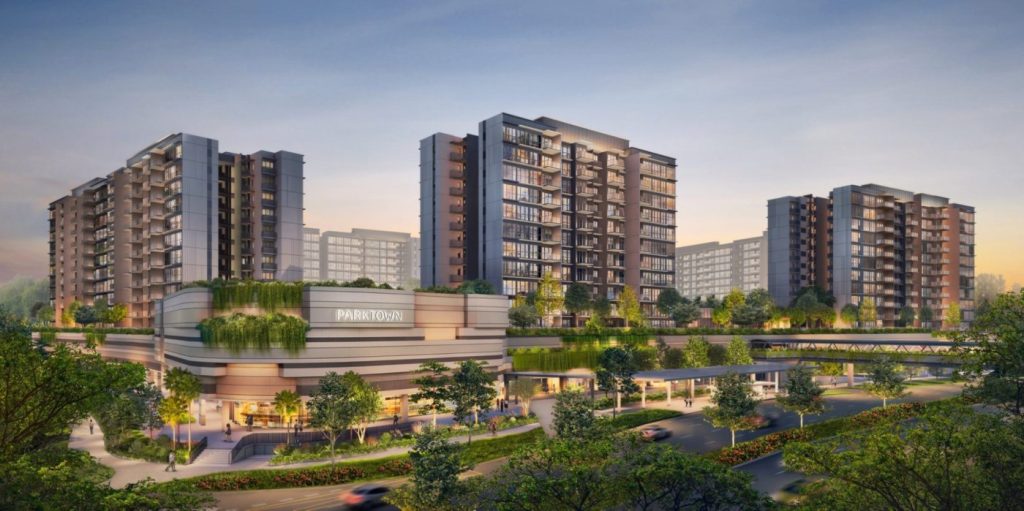
Image Credit: Singapore Land Group
It’s 7 pm on a weekday. You’re exhausted from work, but when you get home, you realize the fridge is empty, your kid needs a haircut, and there’s a parcel waiting to be collected from your favourite shopping platform. For some in more suburban areas, that’s a bus ride or two. For those in integrated developments, that’s taking the lift downstairs.
Welcome to integrated developments, homes built together with a mall, shops, food and services, plus an MRT station and often a bus interchange. I’ll admit I’ve often judged a condo by its proximity to the MRT long before I’ve looked at the floor plan. Occupational hazard.
The catch is that convenience has a price, and both Singaporeans and expats are willing to pay it. So, the real question is how much more, and whether it’s worth it for your family. Let’s take a look.
What Is an Integrated Development in Singapore?

In everyday property talk, an “integrated development” usually means a condo built into, or right beside, one of the Integrated Transport Hubs, which LTA defines as developments with bus interchanges that are seamlessly linked to MRT stations and adjoining developments such as shopping malls.
There’s no official list of integrated developments, so the counts you see elsewhere depend on how strictly you define the term, like whether they exclude executive condominiums or smaller commercial developments. However, the property industry frequently mention 9 to 15 of these developments as a rough estimate.
How Much Extra Do You Really Pay?
No government agency publishes a single “integrated premium”. Anyone quoting one is comparing particular projects in their own way, so I would treat any headline percentage with a pinch of salt.
Check It Yourself in URA’s Free Data
You can see the real prices for yourself. The Urban Redevelopment Authority’s Property Market Information service is free, lets you compare up to five projects at a time, and updates resale transactions every Tuesday and Friday. Its rental contracts search covers the last 60 months and updates monthly.
Here’s how I’d compare:
- Pick the integrated project and up to four non-integrated neighbours.
- Compare price per square foot (psf), but only for similar home sizes and similar completion years.
- Look at rents too, since rents show what tenants will pay for the same convenience.
What you’re buying with that money is time and ease: shorter trips, fewer errands, a sheltered walk in the rain. For some families, that’s worth every dollar. For others, it’s better placed in the reserve fund.
What the Official 2026 Numbers Say
The market is calm, not frantic. In its second-quarter 2026 release, URA reported that private home prices rose 0.5%, slower than the 0.9% in the first quarter. Non-landed prices fell 0.1%, and in the Outside Central Region they fell 0.1% after rising 2.2% in the first quarter.
Supply is generous. The same release shows the full-year Confirmed List of Government Land Sales sites for 2026 at 9,320 units, over 50% above the annual average of the past 10 years. About 60,600 more private units are expected to complete in the coming years. Resale homes made up 62.0% of sale transactions in the second quarter.
For anyone upgrading, HDB’s flash estimate for the second quarter of 2026 put the Resale Price Index at 202.7, down 0.3% from the first quarter.
URA also says the economic outlook remains highly uncertain and advises households to be prudent when buying property and taking loans.
Absolutely. There’s no need to rush.
Who Pays for Convenience?

Singaporean Families
In fast-paced Singapore, convenience becomes more valuable as life gets fuller. SingStat’s Population Trends 2026 shows the share of residents aged 65 and over at 19.5% in 2026, up from 12.4% in 2016.
Many of us are now raising children and helping ageing parents at the same time, and a supermarket, a clinic and an MRT station in one place makes both easier. To make things even more complicated, most households have two working parents! Time is of the essence here.
Newcomers and Expat Families
The Ministry of Manpower reports 204,300 Employment Pass holders as at June 2026. The pass is for professionals, managers, executives and technicians, with a minimum monthly salary of S$5,600 for applicants from age 23.
For families still finding their feet, a supermarket, a clinic and a train line in one place saves a lot of guesswork.
Buying is a different matter. Under the rates announced by MOF, MND and MAS for properties acquired from 27 April 2023, foreigners pay 60% ABSD on any residential property, while PRs pay 5% on a first home. ABSD is the extra stamp duty on additional properties, and on any purchase by a foreigner.
On a $1.5 million home, $900,000 for a foreigner and S$75,000 for a PR, a hefty sum even before the usual stamp duty.
That’s why, for many expat households, the solution is renting, especially properties that offer everything under one roof.
The Trade-Offs Nobody Puts in the Brochure

A mall isn’t automatically a busy one. URA reports island-wide retail vacancy of 6.5% at the end of the second quarter of 2026, so check how full the commercial part of the development is before you pay for it.
Vacancy matters for homes too, at 6.4% for completed private homes and 5.6% in the Outside Central Region. Crowds, noise and privacy depend on the design, so visit on a busy weekend before you commit. And convenience is real, but a current premium isn’t a promise of future gains. If the numbers don’t support it, I’ll tell you it’s not a good buy, however lovely the mall.
So What’s Best For You?
After more than two decades in Singapore property, I’ve learnt that no single answer suits every family. Here are the four I choices I would out.
Buy the Integrated Development
This makes sense if convenience is central to how your family lives, and the numbers work comfortably, not just if you stretch.
Choose a Standalone Condo Nearby
A project within walking distance of the MRT can cost less. You give up some convenience and keep some cash.
Hold On to Your Current Home
If stretching is the only way to afford it, give yourself time to build your reserve first. I always start with your net worth. The property comes second.
Do Nothing Yet
Sometimes this is the smartest move of all.
Check Your Numbers First
Rules change, so confirm the live pages before you act.
- ABSD: The MAS, MOF and MND announcement sets Singapore Citizens at 0% on a first property, 20% on a second and 30% on a third or subsequent one. PRs pay 5%, 30% and 35%, and foreigners pay 60%.
- Upgraders buying new launches:IRAS explains that a signed agreement for an uncompleted unit counts towards your property count from the day you sign, even before completion.
- TDSR:MAS caps monthly debt obligations at 55% of your monthly income for property loans where the OTP was granted on or after 16 December 2021. TDSR is the share of your income that can go to all debt repayments.
- Loan limits: MAS tiers its loan-to-value limits by the number of housing loans you already have.
Frequently Asked Questions
What Is an Integrated Development?
It’s a project where homes, a mall and transport links are planned together, usually with a direct MRT connection as well as a bus interchange.
Are Integrated Developments Worth It?
It depends on how your family lives. If you’d use the MRT and the mall most days, the premium buys real time and ease. If not, that money may work harder in your reserve fund. Either way, it isn’t worth stretching for.
How Do I Check the Premium Myself?
Use URA’s free Property Market Information service to compare transaction prices for the integrated project and its non-integrated neighbours.
Can Expats Buy Integrated Developments?
Yes, but the rules differ by status. Foreigners pay 60% ABSD and PRs pay 5% on a first home, under the MAS, MOF and MND rates. Some buyers are treated differently, so check with IRAS.
To Sum It Up
If you’re weighing one of these projects, we can talk about its numbers and work through it together, before you make your move.
No pressure, no rush, and if it isn’t a good time for you to buy, I’ll tell you that too.